

There’s a moment every homeowner remembers — standing on their land for the first time, imagining the porch, the layout, the mornings with coffee on-site before anything’s built. That’s the fun part. But before any of that becomes real, there’s a quieter, less glamorous phase that makes everything else possible: getting the land ready.
Whether you’re building in Madison, Harvest, Meridianville, Hazel Green, or on a lake lot near Guntersville, site excavation and land clearing follow the same core process but the specifics of your lot (soil, slope, tree cover) shape almost every decision along the way. Here’s what actually happens before the first wall ever goes up, and what’s different about doing this work in today’s market.
It Starts With Really Getting to Know Your Land
Before anyone touches a shovel, we walk the property. Not a five-minute glance — an actual, boots-on-the-ground look at what your land is telling us. Across Madison County, that usually means:
- How steep is it, really? The drop from the road to your building pad shapes almost every decision after this — and it varies a lot between a flat Madison subdivision lot and a wooded parcel in Harvest or Meridianville.
- What’s the soil actually like? Much of Madison County sits on red clay, which swells when wet and shrinks when dry — the “expansive soil” cycle that’s the single most common cause of foundation movement in North Alabama if it isn’t planned for properly.
- Is there rock under there? Parts of the county sit on shallow bedrock, and finding out early — not mid-excavation — saves you real money and real headaches.
- Where does the water want to go? Drainage isn’t just a technical detail. It’s the difference between a dry, stable home site and a muddy mess after every storm.
We’ll usually recommend a geotechnical soil test before locking in your foundation plans, especially on a sloped or wooded lot. It’s a small step that prevents big surprises later.
Clearing the Land — Without Clearing Away What You Love About It
Here’s something we hear constantly from Madison County clients: “I don’t want to lose all my trees.” And honestly? We don’t blame you. Half the reason people fall in love with a wooded lot is the shade, the privacy, the character it gives the property.
So instead of a full clear-cut, we clear selectively:
- We walk the site with you and mark which trees stay
- We clear brush and the trees that genuinely need to go to make room for your home
- We remove stumps and root systems that could cause trouble under your foundation or septic field down the road
- We haul off debris — sometimes chipping it right there and reusing it on-site to help with erosion control
One quick heads-up: depending on your specific lot, tree removal near waterways, floodplains, or within certain municipal boundaries may need a permit. We handle that coordination so it doesn’t hold up your project.

Erosion Control: Set Up Early, Not as an Afterthought
Any time new construction disturbs bare soil — which is every construction site, sloped or not — erosion control has to be planned for from the start, not added in later. That typically looks like:
- Silt fencing along the downhill edge of your lot
- Temporary drainage paths to direct water where it should go, not where it wants to go
- Ground cover on any exposed soil that isn’t actively being worked
- Measures that meet Alabama Department of Environmental Management (ADEM) requirements, which apply more strictly on sites near creeks, wetlands, or lakes
It protects your investment and your neighbors’ property, and it’s usually required before your building permit gets finalized — so it’s not optional, but we treat it as more than a box to check.
Now the Real Shaping Begins
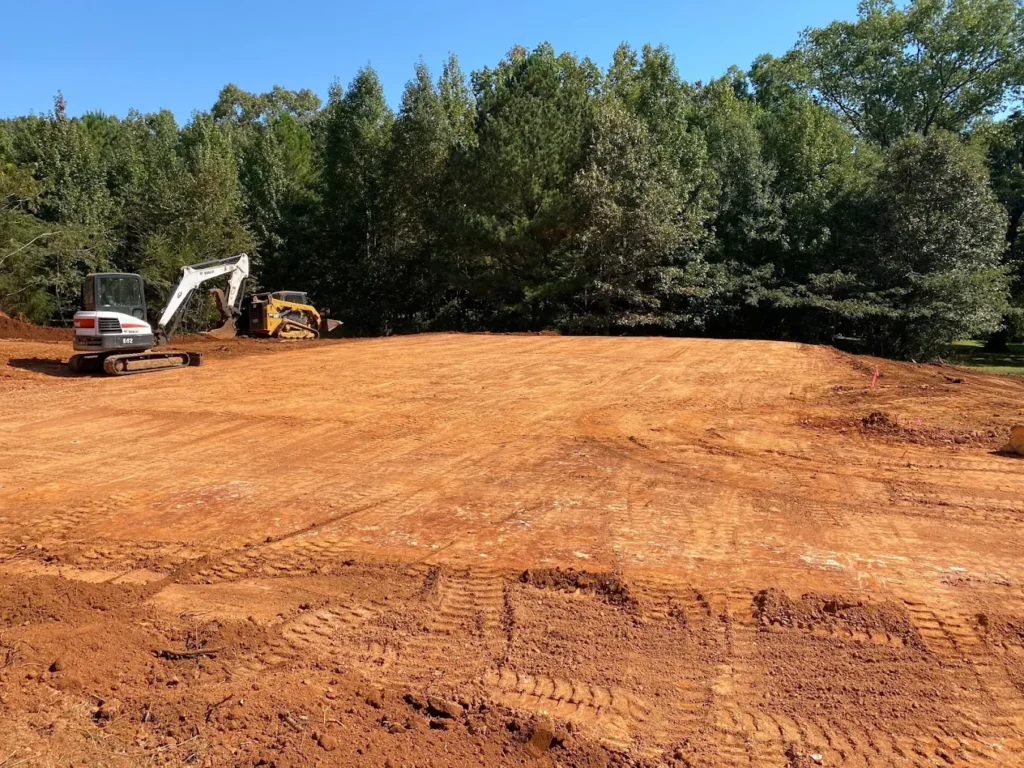
Once the land is cleared and protected, this is where excavation gets genuinely technical, especially on sloped ground. Our crews are:
- Cutting and filling the land to create a level, stable building pad
- Digging your foundation, basement, or crawl space footprint
- Trenching for utilities — water, sewer or septic, electrical
- Shaping a driveway grade that works with your lot instead of fighting it
This is the point where hiring someone who genuinely knows this terrain stops being a nice-to-have and starts being the whole ballgame. A crew unfamiliar with North Alabama’s clay-heavy soil and hillside grading can misjudge drainage in ways that don’t show up until months — or years — later, as the foundation problems we cover in our post on the 7 biggest problems with building a custom home in Madison County.
Getting the Utilities Right the First Time
Before we dig too deep, we coordinate with Alabama 811 to mark existing utility lines, and we plan your new utility runs — including septic placement where municipal sewer isn’t available, which is common across much of unincorporated Madison County. Where your septic system goes depends heavily on the soil percolation test run earlier, so this step connects right back to that first walk of the land. For real cost figures on septic, grading, and utility hookups, see our full land and site work cost breakdown for Madison County.
The Final Check Before Foundation Day
Before anyone pours a foundation, we confirm the ground is truly ready:
- Soil compaction testing to make sure it can actually support your home
- A final grading check against your approved site plan
- One more look to confirm water will drain away from your future home
Once that’s signed off, we hand things over to foundation work, and your project starts to feel real.
What’s Different About Doing This in Today’s Market
A few things worth knowing for 2026 specifically: permitting is taking longer as Huntsville’s growth pushes more volume through plan review (see our 7 biggest problems post for realistic timelines); good excavation crews are busier than they used to be, so booking early matters; and land itself is pricier and harder to find in high-growth corridors like Meridianville and Harvest — all the more reason to get your site-prep budget right before you close on a lot.
A Special Case: Building on a Lake Lot Near Guntersville
If you’re building outside Madison County’s core toward Lake Guntersville, the process above still applies — but the terrain adds a few extra layers worth knowing about specifically:
- Slope is more extreme. Many lake-adjacent lots drop significantly from the road to the water, which changes your grading plan substantially.
- Rock is more common. Parts of the terrain around Lake Guntersville sit on shallow bedrock, which can mean specialized rock excavation.
- Erosion control requirements are stricter. Because these lots sit close to the lake itself, drainage and erosion control get extra scrutiny to protect the water.
- Local jurisdiction changes. Guntersville and the surrounding lake area fall under Marshall County rather than Madison County, which means different local permitting offices and timelines than a Huntsville-area build.
If you’re evaluating a lake or hillside lot specifically, this is exactly the kind of terrain where hiring a crew that’s actually worked it — not just read about it — makes the difference between a smooth start and an expensive surprise.
So, How Long Does This Actually Take?
It depends on your lot. A flat, already-cleared site might only need a few days. A wooded, sloped, or rocky lot can take two to three weeks. Weather, unexpected rock, and local permitting timelines all play a role, and we’ll walk you through a realistic timeline for your specific property before we ever start.
Planning a Build or Major Addition?
At Redstone Ridge Homes, site evaluation, land clearing, and excavation aren’t a separate contractor we hand you off to they’re part of how we build, start to finish, under one roof. Wherever your lot sits in or around Madison County, we’d love to walk it with you and tell you honestly what it’ll take.
Contact Redstone Ridge Homes for a free site consultation — let’s figure out what your land is ready to become.